
In the Pipeline
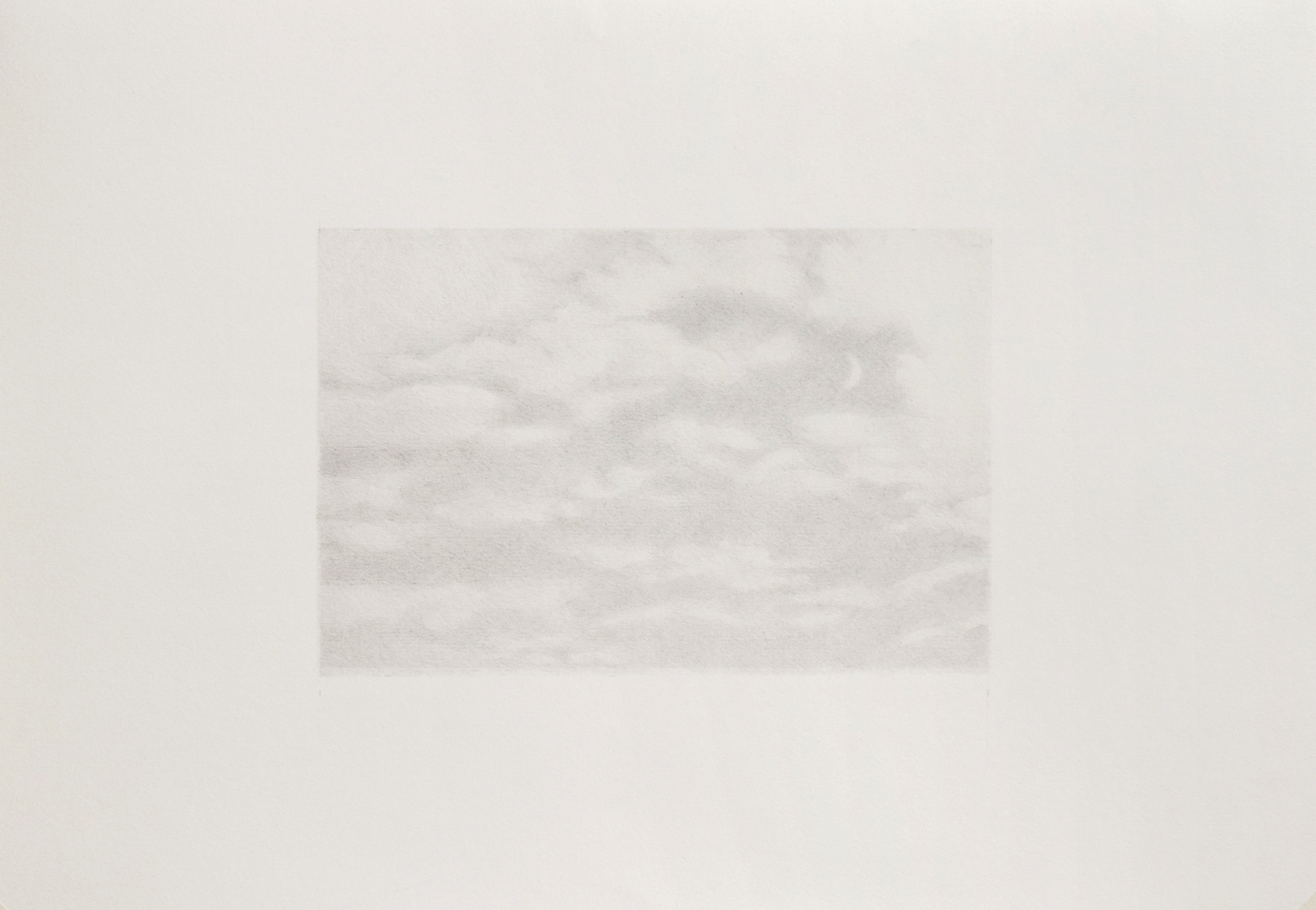
This section presents a single artwork by the artist/artists whose exhibition is next in the program. It is a space directed by the artist, selected to reveal particulars of their current practice or potentials for the future whilst providing essential context ahead of an exhibition.
Callum Harvey
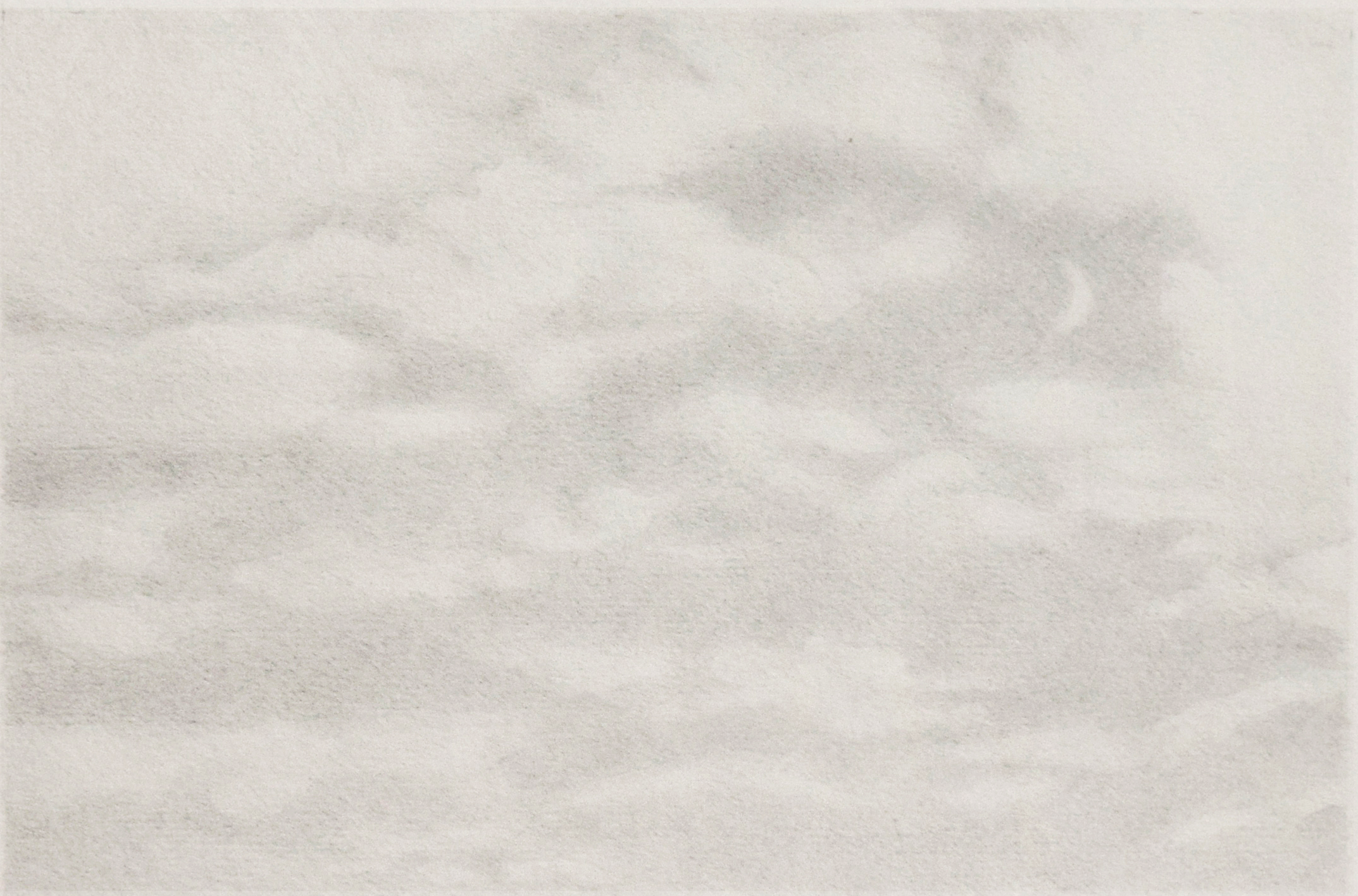
Untitled (Moon),2025
Pencil on paper
29.7 x 42 cm
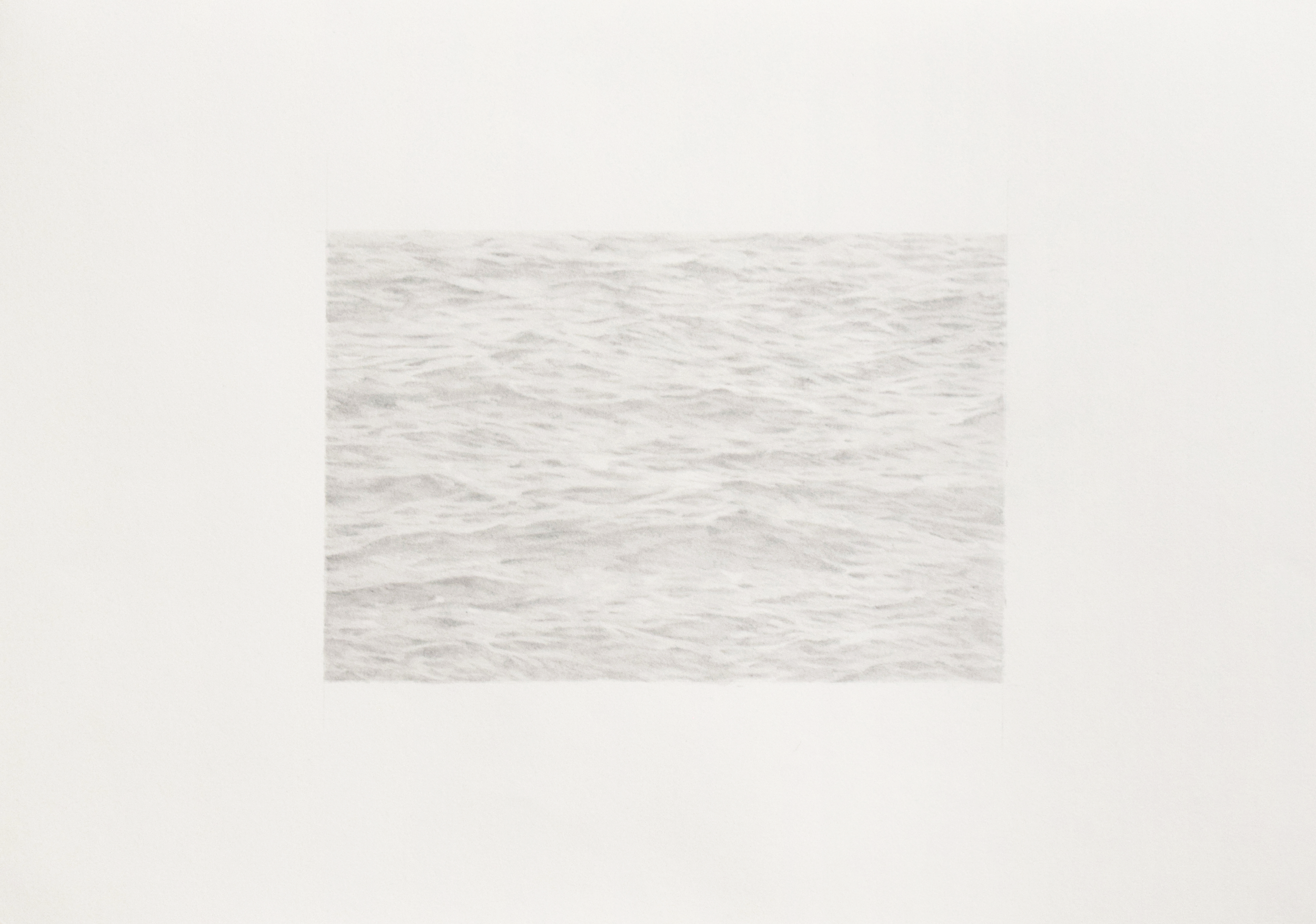
Callum Harvey
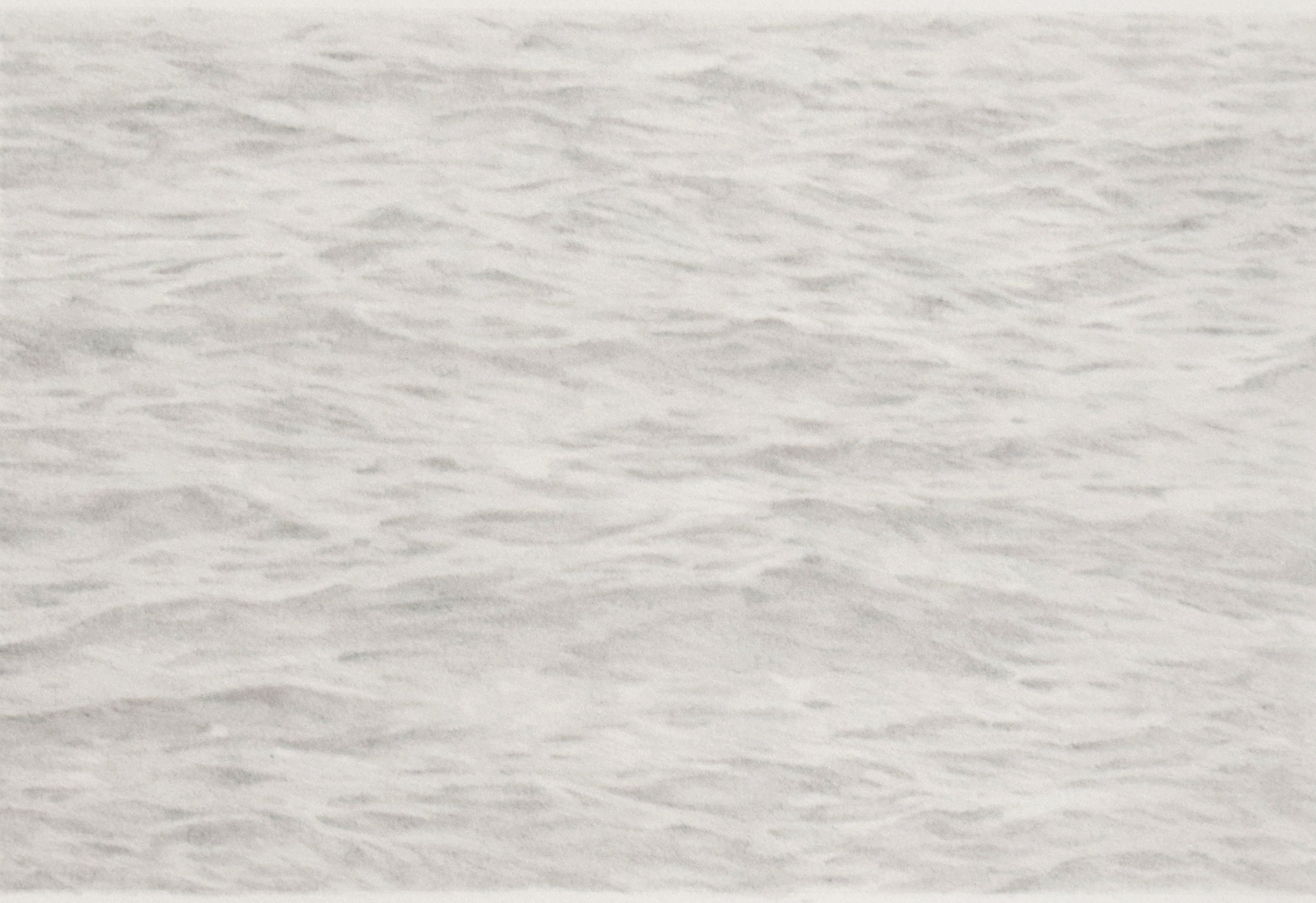
Untitled (Waves),2025
Pencil on paper
29.7 x 42 cm
P:Your practice often returns to ideas of transition and instability within landscapes. Did your time at Gwithian Chapel shift the way you approach representing these environments in your work?
CH: Due to the chapel not being a conventional studio, working was dependent on time of day, and often the weather, as I need a lot of light when working. Having a routine dictated by nature I think influenced the importance to me of making work that gives a sense of time, transition and interconnection. Here, evident in my use of the sea and the moon, as well as swifts, a migratory bird.
Working within the constraints of natural daylight made the ideas of transition and instability more prominent within my practice. It changed my routine from something easily controllable within a brightly lit studio, to having be adaptable and conscious of changes in the weather and time of day having a direct effect on my ability to make.
The surrounding landscape also lent itself incredibly well to the imagery I was interested in, providing the perfect time to photograph and explore new motifs such as the sea and moon, both things that are in a constant state of flux
P: Have any texts, writers, or references shaped these recent drawings?
CH: Yes, Erika Balsom’s ‘An Oceanic Feeling’ was particularly influential. In the book, Balsom examines the representation of the sea and water in cinema, drawing on the ideas of Gilles Deleuze and Félix Guattari. She cites their description of the sea as “the smooth space par excellence” — a realm unmarked by the boundaries and territorial divisions associated with striated space, where fixed forms dissolve into fluidity, movement, and flux.
In this way, when I am working from images such as the sea or sky, they become less about the image or thing itself, and instead become simply a surface and play of light, tone and shadow on the paper or canvas. Balsom’s writing was also influential in my thinking about the sense of time within my work. The sea and the moon have this intrinsic connection to time and the idea of expansive space, evident within cyclical and ever-changing things such as the tide and phases of the moon.
Photographing and then drawing something such as the sky, as Balsom states of filming the sea, “capture[s] traces of the world in time” and through this process of taking the sky and transforming it through film, and now pencil, “something of the world itself would be rendered back, preserved yet transfigured”.
Pipeline: Since your last solo exhibition at Pipeline, you've undertaken a residency at Gwithian Chapel on the Cornish coast. How did that experience shape the work for your upcoming exhibition?
Callum Harvey: The village of Gwithian is situated in the far west of Cornwall, with the surrounding area being expansive, often rugged landscapes and the sea. The chapel itself is an old Methodist chapel built in 1810 that has since become a community space, recently partnering with Falmouth University to offer a series of artist residencies.
Inside is a small open space, complete with old pews and a wooden balcony at the back, as well as big windows that look out on the surrounding trees. It is particularly special as it’s the only remaining thatched Methodist chapel in Cornwall. The nature of the residency also meant I had to pare back my practice, which gave a chance for drawing to have a more significant place within it. I spent a lot of time walking and photographing the area, then coming back to the chapel to make drawings from these photographs.
The work made was also a lot more spontaneous, as with drawing you can quickly try new things without any pressure, getting a few ideas down in one day, whereas my paintings have to follow a much slower process.
P: Your practice moves beyond direct representations of landscape, toward a more subjective and open-ended feeling. Why do you find drawing the right medium for exploring this?
CH: I think that drawing brings me closest to the photographic source material. When I draw, I find it a lot easier to reference that initial point of inspiration. Within the drawings, landscape and natural forms are used as a point of inspiration to explore spaces in a state of transition. Through this, and the cyclical patterns found in nature, each drawing becomes a moment of transformation, where new meanings evolve.
P: How have the drawings made during the residency informed your work going forward?
CH: I kept all the drawings in the show very closely linked to the ideas I was exploring during the residency, with many of the works being a refined version of something started while working in the chapel.
The residency was the perfect place to gather new images to work and draw from. Many of the works in the show are based on photographs I took or found during my time there.
P: Why have you chosen to present ‘Untitled (Waves)' and ‘Untitled (Moon)' ahead of your upcoming exhibition?
CH: ‘Untitled (Waves)’ and ‘Untitled (Moon)’ were among the first works I made when thinking towards this exhibition, based on photographs taken and found during the residency. They became a catalyst for developing ideas around landscape and nature as sites of transformation.
The use of the moon and sea as motifs in these works captures a sense of transition through their tidal connection, evoking cyclical time; a moment held between two states.
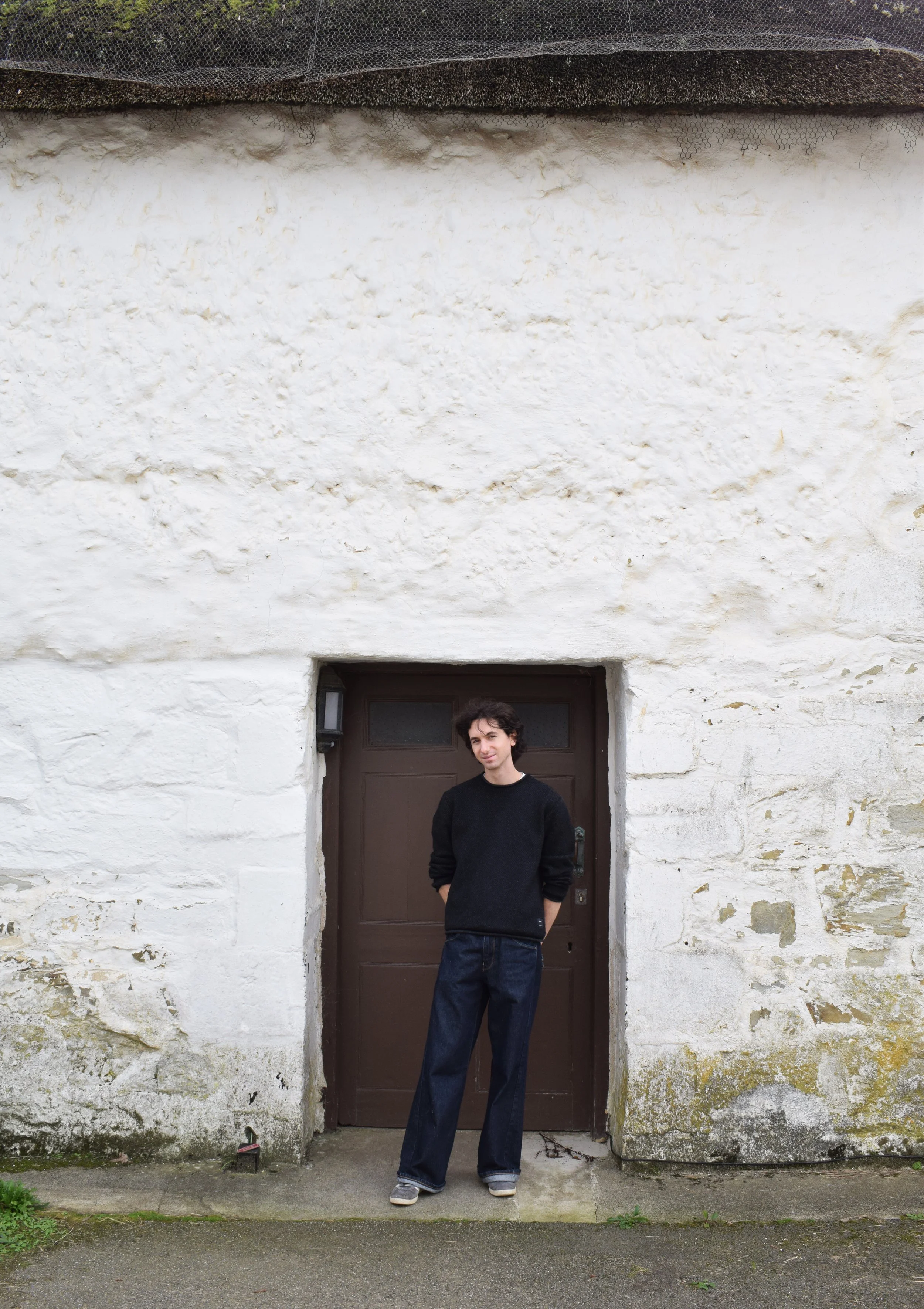
Callum Harvey (b. 1998) lives and works in Cornwall, UK. He completed his BA at Falmouth University in 2020 and received a scholarship to study for his MA at the Royal College of Art graduating in 2023. He completed a residencies at Gwithian Chapel, Falmouth in 2025 and at Porthmeor Studios, St Ives in 2019. Solo presentations include Pipeline, London (2025); Art Rotterdam (2024); Pipeline, London (2023). Group exhibitions include Van Goetz, South Oxfordshire (current); Art Works Gallery, Singapore (2024); Huxley-Parlour at Miart, Milan (2024); Kingsgate Project Space, London (2023); Safehouse, London (2023); Centre Space Gallery, Bristol (2023).